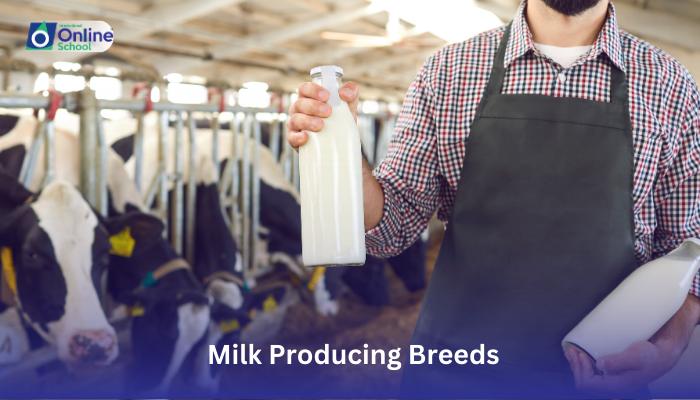
Learning Outcomes:
i. Identify and describe some of the outstanding milk-producing breeds of cows and buffaloes, both local and international.
ii. Understand the factors contributing to high milk production, such as breed characteristics, feeding, and management practices.
iii. Appreciate the vital role of these breeds in dairy farming and the overall economy.
Introduction:
Imagine a land where rivers flow not with water, but with milk! This is the dream of every dairy farmer, and certain breeds of cows and buffaloes are like mighty tributaries, overflowing with their milky bounty. Today, we embark on a journey to meet these champions of the udder, exploring their unique characteristics and understanding the factors that make them dairy superstars.
i. From Desi Champions to Global Stars: Cow Breeds for Milk Production:
Sahiwal: A Pakistani breed known for its heat tolerance, disease resistance, and rich, creamy milk with an average yield of 15-20 liters per day.
Holstein Friesian: The global king of milk production, originating from the Netherlands, known for its high yield (30-40 liters per day) but requiring specific environmental and feeding conditions.
Jersey: A gentle breed with a reputation for producing high-quality milk with a high butterfat content (around 5%), ideal for cheesemaking.
Brown Swiss: A hardy breed known for its adaptability and good milk production (25-30 liters per day), thriving in a range of climates.
ii. Buffaloes: The Powerhouses of Milk Production:
Nili-Ravi: A Pakistani breed recognized for its high milk yield (20-25 liters per day) and strong resistance to local diseases and heat stress.
Murrah: An Indian breed known for its impressive milk production (up to 30 liters per day), large body size, and rich, creamy milk.
Jaffarabadi: Another Pakistani breed with a good milk yield (18-20 liters per day) and adaptability to local conditions, making it popular among small-scale farmers.
iii. Beyond Breed: The Secrets to Dairy Success:
While breed plays a crucial role, high milk production is also influenced by factors like:
Feeding: Proper nutrition with balanced protein, carbohydrates, and minerals is essential for optimal milk yield.
Management practices: Providing clean and comfortable housing, regular health checks, and stress-free environments contribute to cow and buffalo wellbeing and milk production.
Breeding: Selecting healthy animals with good milk production records helps maintain and improve milk yield in future generations.
Outstanding milk-producing breeds are not just animals; they are partners in progress, providing vital nutrition and livelihoods for families and communities. By understanding their strengths, appreciating the factors contributing to their success, and adopting sustainable dairy practices, we can ensure that these champions of the udder continue to be a source of prosperity and a testament to the power of human-animal partnerships.
